Showing posts with label work. Show all posts

Monday, April 08, 2013

Undisturbed

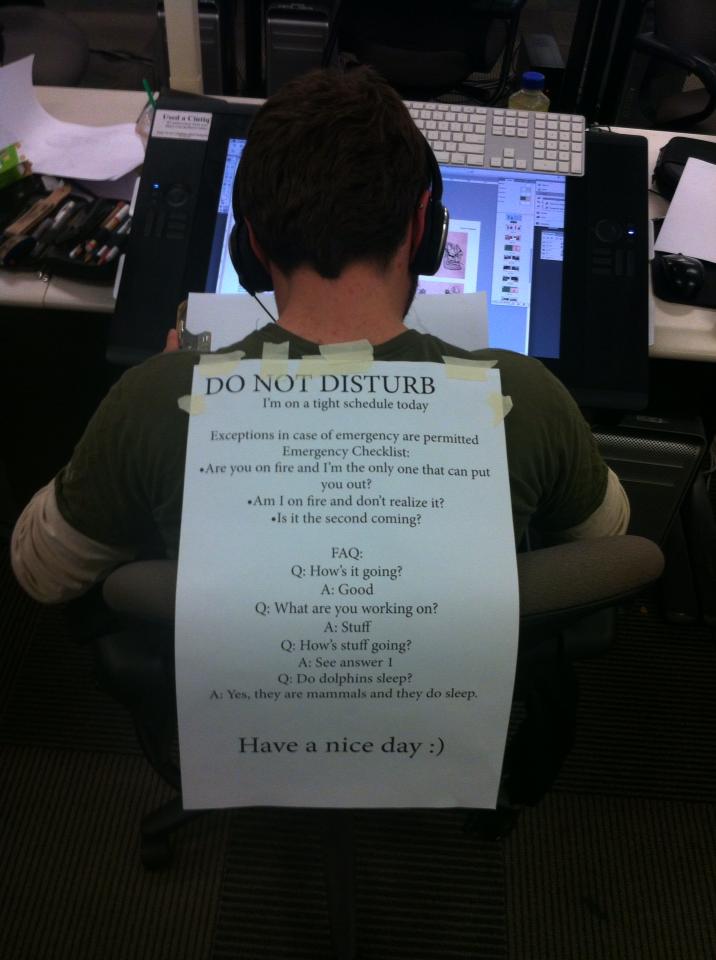
When we worked in cubeland and needed concentrate, we'd often put up a virtual door across the cubicle entrance. The door was a long piece of masking tape with a Do Not Disturb sign stuck to it.
Some people don't even have a cubicle and so must become their own door.
via Boing Boing

Thursday, October 18, 2012

What Glassdoor thinks that I do for a living

Received the latest list of job prospects from Glassdoor. Apparently, someone believes that I'd be any kind of useful in the delivery room because I'm so savy and all.

Sunday, July 15, 2012

Book review: Managing Enterprise Content: A Unified Content Strategy

There are two big challenge for people  trying to develop a unified content strategy, challenges that Ann Rockley and Charles Cooper's book, Managing Enterprise Content: A Unified Content Strategy, don't overcome.

The first is that most organizations don't care about a unified content strategy.  In every business, there are good ideas that languish because no one high in the food chain cares enough to listen to reason. The costs and schedule delays are too small and spread across too many organizational boundaries for any one person to see a major impact on business operations, expenses, or revenue.

Enterprise content is, first and foremost, about the enterprise, not about the content. The enterprise is an ecosystem that produces content, to be sure, but it's mostly concerned with staying healthy by making sure that no one loses their job because they made a bad choice.

Down in the trenches, the problems are all too prevalent. Anyone who has to write anything knows that someone else is writing almost the same stuff someplace else. Things are slightly out of date or out of phase. To fix it, though, requires a major shift in operations and management. It ain't gonna happen.

The second thing is that users don't care much, either. If the manual or online help is out of date, they'll use Google or Twitter to find the answer. It gets to the point that even if the content is correct, users are so out of the habit of trusting the docs that they'll go to Google or their neighbor or the kid down the street before they'll read a help file.

So, managing enterprise content isn't about identifying types of content, developing a taxonomy that resolves concepts and terminology into a coherent whole, or any of that, as important as those steps might be. It's about understanding a) why executives don't care and b) why users don't care and then delivers something that resonates with them.

The book has no mention of organizational issues or ROI or search or SEO or even Google. In other words, the book provides valuable tips (of which there are many)  for developing and managing content unencumbered by management or users.

I've been reading books like this, along with companion white papers and presentations and sales pitches, for a quarter-century. For most of that time, I'd get excited about each new analysis, only to see another project founder on the rocks of executive apathy. I'm disappointed that we haven't advanced beyond these good books and toward solutions that executives want to deliver and people want to use.

---

Disclaimer: I received a copy of this book for review. I will donate my copy of the book. I was not compensated in any other way.

Saturday, June 30, 2012

More on work

Making the rounds of hot topics this week is an article in the Atlantic by Anne-Marie Slaughter. Why Women Still Can’t Have It All tells the story of a woman who gives up her position as a aide to Secretary of State Clinton to, without euphemism, spend more time with her family.

Slaughter has worked in the rarefied levels of government with lots of hours and lots of travel. She decided that working like this wasn't working for her. It's easy to be skeptical of someone who truly has so many options available. After the first few paragraphs, I was ready to argue that point, but she brought in a number of threads that I thought were good.

Because we expect to live longer than previous generations, it's help to rethink the arc of our careers. We can plan, to the extent that we can plan, to peak later, perhaps in our 50s, rather than in our 40s. We can plan to have multiple, smaller career arcs. In short, we no longer have to calibrate our career against the end marker of at 65. (There are obvious exceptions for work that demands a lot of our bodies.)

This notion also leads to the idea that pushing the Social Security retirement age past 70 for most professions makes actuarial sense. We'll leave that for another day.

Dan Kennedy, in last night's Beat The Press, remarked that The Atlantic has a long, proud tradition of running 12,000 words when 3,000 words would have done just fine. Slaughter's article is much too long and so the most useful point, IMO, shows up somewhere beyond word 8,000. The discussion on BTP is also worth a listen.

Saturday, June 02, 2012

Um, to all of you newly-minted college graduates...

Um, to all of you newly-minted college graduates - another path out of your parents' basements is blocked by robots.

Automation Comes To The Coffeehouse With Robotic Baristas | Singularity Hub

Say goodbye to lattes with funky tastes or attitude from coffeehouse baristas. At the University of Texas, a startup called Briggo LLC has installed a coffee kiosk run by a robotic barista in the acad...

Wednesday, May 02, 2012

Notes on the future of work

This morning, we learn from Kevin Kelly in Why can't a machine do this?
If there is pressure to increase the productivity of human workers, the serious question to ask is, why can't a machine do this? The fact that a task is routine enough to be measured suggests that it is routine enough to go to the robots. In my opinion, many of the jobs that are being fought over by unions today are jobs that will be outlawed within several generations as inhumane. (His emphasis)

Of course, robots in the workplace aren't new. We're seeing a lot of robot news stories. Increasingly, those stories are written by robots. (The stories are written by computer programs, which are not literally robots. See the next paragraph.) A Chicago company is using algorithms to write news stories, starting with the sports. It pretty much works, right up to and including the expected cliches. Read more (written by an alleged human) at Can an Algorithm Write a Better News Story Than a Human Reporter?.

Robots are also reading and grading school papers. According to Michael Weinerip, in his NYT piece, Facing a Robo-Grader? Just Keep Obfuscating Mellifluously, these robotic reviews aren't very good at picking up grammatically correct, but factually flawed sentences. Then again, neither is the typical George Will reader.

And, then, well, er, um, here's this news: Researchers Claim Sex Robots Will Be Future Of Sex Tourism. The researchers are Australian, but the CBS affiliate in Las Vegas picked up the story. Dennis Hof, owner of the Bunny Ranch, doesn't think that robots will put his employees out of business. He told the TV station,, that a man mostly wants attention from a woman. "He wants to tell her stories, wants her to listen, wants her to act like she cares – a robot’s not going to do that.”

Meanwhile, over on Shiny Shiny, we learn that Panasonic wants to replace your hairdresser with a robot:


This seems like a good time to be nearer the end of a career than the beginning. It'll be good to get away from the increasingly robotic world and onto a retirement filled with hobbies and friends and memories and, oh, snap.


GeckoSystems CareBot™ helps to alleviate caregiver shortage for Japanese elderly.

Wednesday, April 25, 2012

Don't eat lunch alone

Last night I attended a gathering of our local chamber of commerce.  I like these folks. Most of the people there are trying to build small businesses that let's them do things they're good at. For some people, it's banking or real estate. For others, it can be a store or a services business or goodness knows what.

We talked very little about doing business in the sense of trying to work out a deal. We talked about how we helped other people solve problems. I talked as much about my grandkids as I did about WordPress, Cat5 vs Cat5e vs Cat6 cabling, or state and federal trademark law. I talked with a nursing home administrator about the discussions she'd been having with an about-to-be college graduate, with a bank branch manager about how electronic banking was  giving him and his staff more time to spend on customer service, with a realtor about finding a volunteer opportunity for her teen-aged son. I had a good chat with a guy who called me Gary about the effect that the warm winter had on local businesses.

Toward the latter part of the gathering, I saw John DiPietro. John and I will be giving a LinkedIn workshop for the chamber in a couple of weeks. After talking about the workshop for a bit, John mentioned the interesting results he was getting from posting questions on LinkedIn. His most recent question, Going out for lunch vs eating at your desk, was bringing comments from around the world.

He then noted that, if you're eating lunch at your desk, three bad things may happen: 1) you might spill food on your computer, 2) you'll miss a chance for some exercise, and 3) you'll miss a chance to talk with some. "Go out. Have a cup of soup. See what happens."

In this world of virtual work, it's easy to overlook the opportunities for face-to-face contact. Even if the people around town aren't working on the same things that you are, they're working on something interesting and living lives that offer something important.

I stayed for a while longer, talking with a web designer about developing sites for multiple platforms, particularly for the smaller screens on mobile devices.

When it was time to leave, I waved to the guy I'd seen earlier.

"Bye, Gary," he said. "Thanks for coming."

Saturday, March 17, 2012

Digital nomads

Recently we had dinner with some long-time friends. One couple is retired. The other couple is getting ready for retirement, but they aren't quite sure if they ready yet. It's more about what they'd do than about finances. He's an electrician. After a tough slog through the recession, he's found good work that will last a couple more months. After that, there may be other jobs opening up. She's a preschool teacher. She started to retire, but returned a few months later.

They asked what we're doing these days. Sandra, we said, is working part-time at son Mike's business and having a very good time. When it was my turn, I mentioned that I was writing for a few tech websites, teaching a bit, and picking up IT and web support work as it came along. It sounds like a lot, but added it still doesn't reach half-time.

How I do this work, it turned out, was more interesting. I mentioned that I'd never met my bosses and likely never would. I've known nne of my colleagues, an editor for one of the sites, for 30 years. I last saw him last summer at his mother's funeral in Maine. The previous time was two or so years before that and then several years beyond. It's doubtful that I'll meet the other writers in person, except by chance. For another project in Worcester, I see the project manager perhaps once every two months.

I do leave the house a few times a week. Rocco starts to get excited when I put on my going-out-of-the-house pants because it means a) he'd going for a ride or b) he's going to be left alone for a while. If I take my brief case, his spirit dims because it's much more likely that I'll be out for a while and he won't be going.

When I am away from the house, my office is wherever I am. On Friday, I met a friend and former co-worker at Panera Bread in Leominster. Another friend and former co-worker claims that this Panera is like 5th Avenue and 57th Street in New York -- spend any time there and you'll see someone you know. She told me this when I saw her by chance at this Panera on Friday where she was having coffee with another friend from Holden. A half hour later, our next-door neighbor came in for lunch with her co-workers.


Saturday, December 17, 2011

Report from Chicagoland

We trekked to the Chicago area to attend a family (my second cousin-in-law) wedding and to visit long-time friends in the college town of Urbana. Lemme tell you, if there's gloom in nation, a pall on America's spirit, I didn't find it here. Folks are going about their business. They're making lives, working hard, and are hopeful for their kids and grandkids. They're glad for a light snow cover to make December feel like Christmas.

To be sure, we didn't initiate any conversations aobut politics with anyone outside of the decidedly liberal crowd at the taping of Wait Wait...Don't Tell Me!. We let people about work and families and the usual fare for people who'd just met.  The most serious social problem that I heard discussed came from one woman who told of neighborhood kids playing baseball in her driveway and denting her garage door.

[caption id="attachment_3029" align="alignleft" width="179" caption="A room with a view"][/caption]

The rehearsal dinner was in a restaurant in the back of a bowling alley. Several people at the lanes were wearing Bowling for Jesus shirts "because He died your pins."

It's true that Marshall Field's has been hollowed out and replaced by Macy's, that Dunkin' Donuts is bringing its alleged coffee to every street corner and gas station. There were few choices for breakfast near our hotel that's at the back of a large shopping mall that's in the middle of the carpet of suburbs. So we had our breakfast at IKEA and were very pleased. We ate lunch at the restaurant next to the Bass Pro Shop.

The people we spoke with were unfailingly polite as you'd expect. Their work was often in flux. The people getting married are in their mid-30s, late by the standards of previous generations, but common now. Housing prices are low, but credit is extremely tight, so attractive homes stay on the market for a long time. There weren't  a lot of little kids around, letting the four-year-old ring-bearer enjoy his day without competition.

We talked long enough to get beyond the introductory niceties. People didn't, of course, get to deep stories, but they did talk of their futures, what they liked and disliked about their jobs, what they did on weekends, and what they imagined for retirement. None of it was on hold until the 2012 election. None of it was about 99% or 1%. None of it was about class war or the war on Christmas or or who believed what. They talked about what they were doing and what they were gonna do.

If you read or watch or listen to the news, you might think that the fabric of the nation is irrecoverably split. The news spends too much time listening to itself.  Chicago may be divided, but it's between Cubs fans and White Sox fans, those who care or don't care that Theo Epstein might bring a World Series championship to Wrigley Field.
Wednesday, December 07, 2011

Dress for success in the 21st century

Older workers, take note. A lifetime of gravitational effects makes us shorter. That may have an effect on your income. What medicine can't correct can be helped by fashion.

The correlation between height and income has been known for a long time, although a U.S. study suggests that the correlation only works for aggregate numbers, not for individuals. If you chart the height of 1000 people, for example, the income distribution curve will match the height distribution curve. If you compare two individuals, however, too many other factors come into play to make the height difference significant.

[caption id="" align="aligncenter" width="303" caption="via Statistics Say These High Heels Will Get You A Pay Raise"]A devstating set of red high heels[/caption]

That distinction, however, isn't stopping a German shoe company from running a series of ads suggesting that this set of bright red high heels would do wonders for your income.
The ads show a closeup of the heels, with headlines such as "Men over 180 cm earn 10% more money" and "80% of top managers are over 180 cm tall."

So, if you see me in a pair of these shoes, know that it's only for the money.

Thursday, July 28, 2011

The job's yours, unless you need it.


A couple of months ago, an email came through with information about a contract technical writing job with Staples. The message, sent by a recruiter, included this delicious sentence:
Only seeking candidates who have been recently (within the last 3 months) been working as a technical writer.
This is a contract position, mind you, not even a permanent job. They didn't want anyone who was a) new to the profession or, more likely, b) out of work for a long time.
I muttered a bad word and forgot about the email until I saw this article in the New York Times: The Help-Wanted Sign Comes With a Frustrating Asterisk
It appears that this is a common trend. Employers, flush with stimulus funds and renewed tax cuts,  are choosing to treat people who have been out of work for a long time as damaged. (This also applies to people who have gone through training in preparation for a career change.)
It may not be quite as bad as it seems. A search through Monster, SimplyHired, Craigslist, and a few other job sites only showed this example from Monster:

The Times article notes that New Jersey has passed a law that prohibits discrimination against the unemployed.
And so, tonight's moment of Zen: would you ever get the chance to turn down a job offer from a place that wouldn't hire you because you were out of work? 

The job's yours, unless you need it.


A couple of months ago, an email came through with information about a contract technical writing job with Staples. The message, sent by a recruiter, included this delicious sentence:
Only seeking candidates who have been recently (within the last 3 months) been working as a technical writer.
This is a contract position, mind you, not even a permanent job. They didn't want anyone who was a) new to the profession or, more likely, b) out of work for a long time.
I muttered a bad word and forgot about the email until I saw this article in the New York Times: The Help-Wanted Sign Comes With a Frustrating Asterisk
It appears that this is a common trend. Employers, flush with stimulus funds and renewed tax cuts,  are choosing to treat people who have been out of work for a long time as damaged. (This also applies to people who have gone through training in preparation for a career change.)
It may not be quite as bad as it seems. A search through Monster, SimplyHired, Craigslist, and a few other job sites only showed this example from Monster:

The Times article notes that New Jersey has passed a law that prohibits discrimination against the unemployed.
And so, tonight's moment of Zen: would you ever get the chance to turn down a job offer from a place that wouldn't hire you because you were out of work? 

Friday, June 24, 2011

Dept. of Self-Promotion

I am now a blogger on The CMO Site, an executive social network that provides research and analysis for chief marketing officers and other marketing executives with a focus on technology and social media. I'm grateful to be working with long-time friend, Keith Dawson, who is senior editor at the site.
My first post, Massachusetts Healthcare Marketers Struggle With Consumer Apathy, went live this morning.

Friday, May 27, 2011

On the job search front

Job prospects seem to be improving. Every day, there's at least one lead to pursue. Last year, weeks could go by in silence.
I had a call from a recruiter regarding a very interesting job last week. I declined to pursue it because of the commute. The company _really_ wanted someone on-site all of the time and I'm not willing to spend 20% of my waking hours in my car.
Yesterday, though, I had a good conversation with another consultant who may have some assignments that might be a good fit. We'll talk more in the coming weeks.
Meanwhile, the online sites offer, I'd said, one or two leads a day, which is a very good sign for job-seekers and for the overall economy.
We are seeing that pay rates are slow to recover. Few, mercifully, have reached this level:

via Technical Writer job in Boxborough, MA - Kelly IT Resources

On the job search front

Job prospects seem to be improving. Every day, there's at least one lead to pursue. Last year, weeks could go by in silence.
I had a call from a recruiter regarding a very interesting job last week. I declined to pursue it because of the commute. The company _really_ wanted someone on-site all of the time and I'm not willing to spend 20% of my waking hours in my car.
Yesterday, though, I had a good conversation with another consultant who may have some assignments that might be a good fit. We'll talk more in the coming weeks.
Meanwhile, the online sites offer, I'd said, one or two leads a day, which is a very good sign for job-seekers and for the overall economy.
We are seeing that pay rates are slow to recover. Few, mercifully, have reached this level:

via Technical Writer job in Boxborough, MA - Kelly IT Resources

Friday, April 01, 2011

Uphill in the snow both ways

At this writing, we have four inches of snow (.032 cubic hectares for our metric readers). The forecast suggests that we'll double that and then some before the day is over. We  have a couple of plans for the afternoon and will make a decision late morning. I don't mind a day at home. I have school work and work work aplenty.
Late-season winter blasts are nothing new. I'm not sure that I'd even call this a late-season event. Last year we had a hard freeze in mid-May. The crocuses were peeking out in the warmer parts of our yard a couple of days ago. They're not silly. They grow based on the ground temperature, which is getting progressively warmer even as the air above does its own weird thing.
The April Fool's Day storm of 1997 was as big a storm as you'll get, two feet of white cement. That's another thing about later-season storms - the snow contains much more water. A mid-January storm can have a fluff factor of 15:1 - 15 inches of snow for each inch of melted liquid. Storms during April and May can have ratios down to 8:1.
I was working at a small startup in Westford. (We were building a $100K 100GB fileserver.) Our CEO and CFO were scheduled to start their big roadshow that would prepare investors for our initial public offering later in the year. Important meetings were scheduled for New York that day and later in Miami.
The execs went to the airport while the rest of the crew was back at the office. (Working from home wasn't much of an option. The company shared a single 56K modem line at its corporate Internet connection. Microsoft's PPTP was just rolling out and not well understood.) We got hourly updates about their attempts to get on one flight and then another throughout the day. At day's end, they were still at Logan and the money guys were still in New York. At six o'clock, we dug out our cars and drove home. I'd be back 12 hours later for another day.
The roadshow was rescheduled and we had our IPO in the summer. IIRC, the strike price was $5.00. It briefly peaked at $5.25 and never saw those levels again.
If you're a New Englander, you can't get very far by trying to blame your troubles on the weather. The  April Fool's Day storm had almost no effect on the company's fate. We earned our bad luck from our own hard work. 

Uphill in the snow both ways

At this writing, we have four inches of snow (.032 cubic hectares for our metric readers). The forecast suggests that we'll double that and then some before the day is over. We  have a couple of plans for the afternoon and will make a decision late morning. I don't mind a day at home. I have school work and work work aplenty.
Late-season winter blasts are nothing new. I'm not sure that I'd even call this a late-season event. Last year we had a hard freeze in mid-May. The crocuses were peeking out in the warmer parts of our yard a couple of days ago. They're not silly. They grow based on the ground temperature, which is getting progressively warmer even as the air above does its own weird thing.
The April Fool's Day storm of 1997 was as big a storm as you'll get, two feet of white cement. That's another thing about later-season storms - the snow contains much more water. A mid-January storm can have a fluff factor of 15:1 - 15 inches of snow for each inch of melted liquid. Storms during April and May can have ratios down to 8:1.
I was working at a small startup in Westford. (We were building a $100K 100GB fileserver.) Our CEO and CFO were scheduled to start their big roadshow that would prepare investors for our initial public offering later in the year. Important meetings were scheduled for New York that day and later in Miami.
The execs went to the airport while the rest of the crew was back at the office. (Working from home wasn't much of an option. The company shared a single 56K modem line at its corporate Internet connection. Microsoft's PPTP was just rolling out and not well understood.) We got hourly updates about their attempts to get on one flight and then another throughout the day. At day's end, they were still at Logan and the money guys were still in New York. At six o'clock, we dug out our cars and drove home. I'd be back 12 hours later for another day.
The roadshow was rescheduled and we had our IPO in the summer. IIRC, the strike price was $5.00. It briefly peaked at $5.25 and never saw those levels again.
If you're a New Englander, you can't get very far by trying to blame your troubles on the weather. The  April Fool's Day storm had almost no effect on the company's fate. We earned our bad luck from our own hard work. 

Monday, March 28, 2011

More on work and clothes

If I stand on a chair, I can see the end of the semester. Between now and then is plenty of  school work, a paper, a presentation, exams, 'n such, but it'll all get done. I need a much bigger chair, though, to see beyond that, a chair even bigger than Gardner's big chair.

via Zippy The Pinhead: "Well-Endowed"
A time is coming when I'll need to buy some interviewing clothes. I'm mindful of Thoreau's caution about new clothes (which is more about changing ourselves rather than about our clothes.) My current jacket is, I kid you not, an $8.00 special that I picked up at the Sears outlet store last fall. I remember fondly that, when Barney Frank ran for re-election as state rep in 1974, he had a poster that proclaimed "Neatness Isn't Everything."
Today's Boston Globe has a style supplement, How to update a classic blazer, with some guidance for the man in need of help. The featured article of clothing is a blazer, around which we're to build several wardrobes. Their recommendation is for a Reporter "Quick Jacket" that runs a cool $595.
Buy a really good jacket and it'll all make sense. Pfft. The jacket is just the down-payment. I'll need a $275 shirt, $495 shoes, and, well, it's clear that we headed in the wrong direction.
My new degree suggests that I should be looking for a job as a paralegal. Might then some blogs that cover paralegal careers be helpful. Let's see.
Practical Paralegalism often has some good tips. Last Monday's post was titled Paralegal Career Dressing. Almost. The subtitle is Flower Brooches from JKW Jewellery. There's a picture of Carrie Bradshaw. I opened the wrong door.
A link in an earlier post showed some examples of what a male paralegal might wear to lunch. The prices have moved from Newbury Street to your basic shopping mall. That's probably the best that we can do.
It'll also depend on the type of work I seek as a BBC correspondent discovered when reporting on the minimalist dress code of the Amazon's Awa people.
Did I mention that I finally had to retire my red paisley suspenders (braces to you folks across the pond)? I bought them at Spag's for five bucks a dozen years ago.
I don't mind looking good. I just don't want to be afraid of my clothes. I don't do well when I am spending more time thinking about how I look rather than how I'm thinking.

More on work and clothes

If I stand on a chair, I can see the end of the semester. Between now and then is plenty of  school work, a paper, a presentation, exams, 'n such, but it'll all get done. I need a much bigger chair, though, to see beyond that, a chair even bigger than Gardner's big chair.

via Zippy The Pinhead: "Well-Endowed"
A time is coming when I'll need to buy some interviewing clothes. I'm mindful of Thoreau's caution about new clothes (which is more about changing ourselves rather than about our clothes.) My current jacket is, I kid you not, an $8.00 special that I picked up at the Sears outlet store last fall. I remember fondly that, when Barney Frank ran for re-election as state rep in 1974, he had a poster that proclaimed "Neatness Isn't Everything."
Today's Boston Globe has a style supplement, How to update a classic blazer, with some guidance for the man in need of help. The featured article of clothing is a blazer, around which we're to build several wardrobes. Their recommendation is for a Reporter "Quick Jacket" that runs a cool $595.
Buy a really good jacket and it'll all make sense. Pfft. The jacket is just the down-payment. I'll need a $275 shirt, $495 shoes, and, well, it's clear that we headed in the wrong direction.
My new degree suggests that I should be looking for a job as a paralegal. Might then some blogs that cover paralegal careers be helpful. Let's see.
Practical Paralegalism often has some good tips. Last Monday's post was titled Paralegal Career Dressing. Almost. The subtitle is Flower Brooches from JKW Jewellery. There's a picture of Carrie Bradshaw. I opened the wrong door.
A link in an earlier post showed some examples of what a male paralegal might wear to lunch. The prices have moved from Newbury Street to your basic shopping mall. That's probably the best that we can do.
It'll also depend on the type of work I seek as a BBC correspondent discovered when reporting on the minimalist dress code of the Amazon's Awa people.
Did I mention that I finally had to retire my red paisley suspenders (braces to you folks across the pond)? I bought them at Spag's for five bucks a dozen years ago.
I don't mind looking good. I just don't want to be afraid of my clothes. I don't do well when I am spending more time thinking about how I look rather than how I'm thinking.

Saturday, January 15, 2011

More on work

My Linkedin connections have ratcheted up their activity level since the start of the new year. At last count, my associates collectively posted more than 750 status updates. Most of the activity is the result of people making new connections.
When one person shows a lot of new connections, it's often an indicator that the person has or is about to lose a job. When there's a squall like this, from people at different companies, something else is going on. I suspect, but can't confirm yet, that this is a good sign. People who have jobs are looking for better jobs or at least are thinking about it. They're wondering who among their connections is doing what.
People aren't finding the kinds of steady jobs of old. Those jobs and the expectations for same ended probably 20 years ago. Tom Peters predicted it in the 80s and has ridden the wave of New Work for a pretty good career. He used to say that your career was your Rolodex (back when folks knew what one was), that you always needed to be thinking about how you'd be assembling a job based on your personal connections. Companies, too, would be developing virtual, ad hoc teams that would come together for quick projects and dissemble with no hard feelings.
Of course, lots of people have made a living with all kinds for a long time. Recently, a guy has received a lot of attention for admitting that he wrote college papers for pay. (These folks have an, um, interesting name for their company in this line of business.) Some 40 years ago, I did the same. I didn't write many and probably made only a few hundred bucks. I did  guarantee a B. My big advantage was that I could type, making it easier for the customer who didn't have to recopy the text into his (it was all guys) handwriting. It might be the only typewritten paper that the student ever handed in, but in a big school, no one noticed.
Funny thing. I was bombing out of my own courses even as I wrote B papers in sociology, English, and history. Karma generally finds you, eh?

Blog Archive